How Long Should You Spend in Turkey? A Realistic Guide
Updated: August 2026
Turkey is one of those countries where the answer to “How long do I need?” changes dramatically depending on whether you are planning a city break, a classic first journey or a deeper regional trip.
Five days can be enough for Istanbul and one additional destination if the logistics are clean. A week can introduce two strong regions. Ten days allows a much more satisfying first-time combination of Istanbul, Cappadocia and western Turkey, while two weeks begins to create the freedom to slow down, add the coast or explore somewhere beyond the standard route.
The mistake is assuming that more days simply mean adding more destinations.
In reality, additional time should usually buy better pacing, fewer rushed transfers and a more complete experience of the regions already on the itinerary. A traveler with fourteen days who visits seven cities may feel more hurried than someone with ten days who chooses three places well.
Turkey is geographically large, and its most famous destinations are not clustered closely together. Istanbul, Cappadocia, Ephesus, Pamukkale, Antalya and the Black Sea all belong to different travel zones. Moving between them can involve domestic flights, long road transfers, airport time and repeated hotel changes.
So the useful question is not whether seven, ten or fourteen days is objectively “best.”
It is:
How much of Turkey do you want to experience, and how quickly are you willing to move to experience it?
Count Usable Days Before You Decide How Long the Trip Is
A ten-day holiday is not automatically ten days of sightseeing.
International arrival and departure times can remove a surprisingly large amount of usable time. A traveler landing in Istanbul at 19:00 and flying home at 08:00 ten calendar days later may effectively have eight full days rather than ten.
Domestic transfers also need to be counted honestly.
A flight from Istanbul to Cappadocia may be relatively short in the air, but the real journey includes airport transfer, check-in, security, boarding, baggage collection and another road transfer to the hotel.
This is why trip duration should be measured in usable travel days, not simply hotel nights or dates on a ticket.
Before adding any destination, remove the time that belongs to airports, check-ins and major transfers. What remains is the real trip.
Five Days: Enough for a Focused Turkey Introduction
Five days can work well when the traveler accepts that this is an introduction rather than a countrywide journey.
The strongest approach usually centers on Istanbul alone or combines Istanbul with one efficiently connected region, most commonly Cappadocia.
Attempting Istanbul, Cappadocia, Ephesus and Pamukkale within five days produces a technically possible itinerary that offers very little time to experience any of them properly.
A five-day traveler benefits from commitment.
If Istanbul is the priority, stay there and let the city develop beyond its most famous monuments.
If Cappadocia is essential, build the journey around two meaningful destinations rather than trying to prove how much of Turkey can be crossed in less than a week.
Short trips become enjoyable when ambition is narrow enough to match the calendar.
Seven Days: Two Regions Comfortably, Three Only With Discipline
A full week gives the itinerary more structure.
Istanbul plus Cappadocia works naturally and can provide a very strong first Turkey experience because the two regions contrast so sharply. One is enormous, urban and historically layered; the other is defined by valleys, rock formations, cave architecture and Central Anatolian landscape.
A third destination can be added, but the travel rhythm becomes much tighter.
For example, adding Ephesus can make sense when transport is carefully coordinated, although the trip begins to contain more movement and fewer flexible days.
Seven days is therefore best thought of as a two-region trip with optional ambition, rather than a shortened version of a full Turkey circuit.
For travelers who dislike packing every second morning, two destinations usually produce the better week.
Ten Days: The Sweet Spot for Many First-Time Travelers
Ten days changes the planning equation considerably.
This is where Istanbul, Cappadocia and one substantial additional region can coexist without every day becoming a transfer.
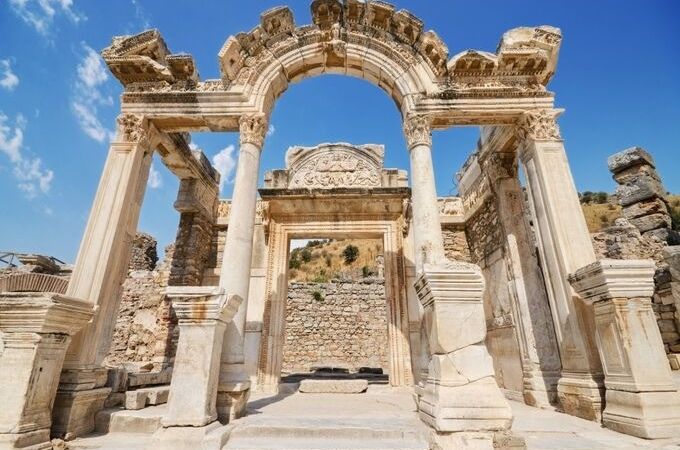
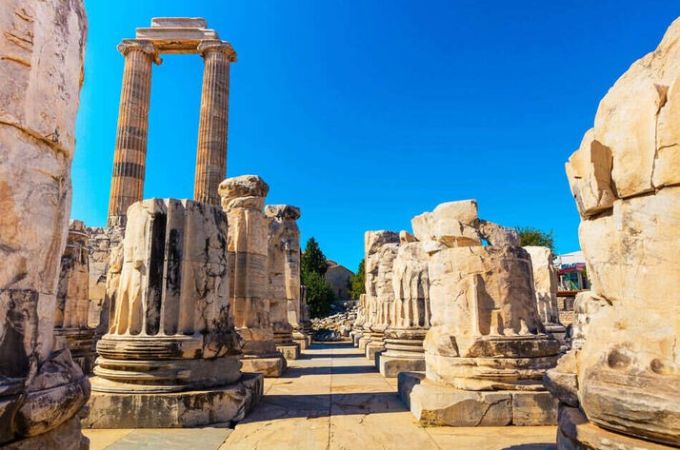
Western Turkey is a natural third choice because Ephesus, nearby Aegean destinations and possibly Pamukkale can fit within the same broader geographical chapter.
The coast can also become the third region when relaxation is more important than archaeology.
Ten days is long enough to create contrast but still short enough that route discipline matters. Adding Antalya after Istanbul, Cappadocia, Ephesus and Pamukkale can easily push the trip back toward constant movement unless another destination is removed or reduced.
That is why our dedicated 10-day Turkey planning guide should remain separate from this page. Its job is to explain exactly how those ten days should be allocated; this article only helps the traveler decide whether ten days is the right total duration in the first place.
Fourteen Days: Where Turkey Begins to Feel Less Compressed
Two weeks is the point at which many travelers stop choosing between major experiences and begin combining them.
A first-time itinerary can include Istanbul, Cappadocia, western archaeology and a coastal section without requiring every transfer to happen immediately after the previous sightseeing day.
The extra time also allows for strategic rest.
A slower morning in Cappadocia no longer feels expensive. Several nights by the Mediterranean can function as actual coastal travel rather than a brief photograph between flights. Ephesus and Pamukkale can be approached with enough time that neither feels like a logistical inconvenience.
This is where travelers often make another mistake, however: they use the extra four days to add four more destinations.
Two weeks works best when some of the additional time becomes depth rather than geography.
For many first-time visitors, twelve to fourteen days is therefore the most balanced range.
Three Weeks: Regional Turkey Starts Becoming Possible
Once a trip reaches around three weeks, Turkey begins to open beyond the classic circuit.
A traveler can still include Istanbul, Cappadocia and western Turkey while adding another region such as the Black Sea, southeastern Turkey, a more substantial Mediterranean stay or a longer sailing section.
The trip can also become less linear.
You may spend four or five nights in Istanbul rather than trying to finish the city quickly, or allow several nights around the southwest coast without feeling that Cappadocia is being sacrificed.
Three weeks is especially valuable for travelers who enjoy food, architecture, local neighborhoods and landscapes as much as headline attractions.
At this duration, the trip starts becoming about regional character, not simply famous destinations.
Travelers who want that broader structure can consider extended Turkey cultural journeys, where the route is built around contrast rather than a compressed highlights checklist.
How Many Regions Fit Into Different Trip Lengths?
A useful planning framework is to compare duration with the number of regions that can be experienced comfortably.
| Total trip length | Comfortable number of major regions | Typical travel style | Main risk |
|---|---|---|---|
| 4–5 days | 1–2 | Focused introduction | Trying to add too much |
| 7 days | 2 | Strong two-region journey | Third destination creates compression |
| 10 days | 3 | Classic first trip | Overloading the route |
| 12–14 days | 3–4 | Balanced multi-region journey | Adding destinations instead of slowing down |
| 15–21 days | 4–5 | Deeper regional travel | Excessive internal flights if route is poorly designed |
| 3+ weeks | 5+ selectively | Slow or specialist travel | Losing route coherence |
The number of regions is more useful than the number of cities because several nearby destinations may function as one broader travel zone.
Istanbul Needs More Time Than Most Travelers Initially Give It
Istanbul is often the first destination to lose nights when travelers begin adding Cappadocia or Ephesus.
That can weaken the trip quickly.
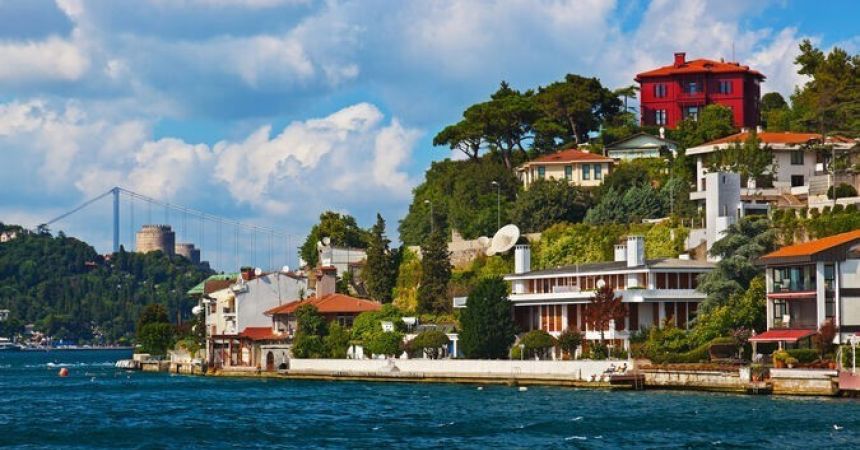
The city contains enough historical depth, neighborhoods, museums, food and Bosphorus experiences to justify several full days, particularly for first-time visitors.
A two-night Istanbul stay may deliver little more than the historic peninsula and one additional experience, especially if the international arrival consumes the first evening.
Three full days is a much stronger minimum, while four or five days becomes worthwhile for travelers who genuinely enjoy major cities.
The dedicated Istanbul stay-length guide should handle that decision in detail, but at country level the principle is straightforward: do not reduce Istanbul below the point where it stops feeling like a destination and becomes only the international airport you happened to use.
Cappadocia Needs Enough Nights to Survive Uncertainty
Cappadocia creates another duration issue because travelers frequently plan around one hot-air balloon morning.
Balloon flights are weather-dependent, so a very short stay creates a fragile itinerary when the experience is important.
The region also deserves time beyond ballooning. Valleys, underground cities, rock-cut churches, villages and cave accommodation are part of the reason Cappadocia is worth traveling into Central Anatolia.
Two to three nights can work well for many travelers, while longer stays become attractive when hiking, photography or a slower rhythm matters.
The point is not maximizing Cappadocia nights.
It is avoiding a stay so short that the entire experience depends on one morning behaving exactly as planned.
Western Turkey Can Be Treated as One Travel Chapter
Ephesus, Izmir, Kuşadası, Pamukkale and other western destinations can appear as separate points on a map, but itinerary planning improves when they are grouped more intelligently.
This region can function as the archaeology and Aegean chapter of the journey.
Ephesus may be the principal historical experience, while Pamukkale can be included when route logic supports it rather than added automatically. Izmir or Kuşadası can serve different accommodation and transport purposes according to the itinerary.
This regional thinking helps travelers avoid counting every stop as another destination requiring a separate travel day.
A ten- or fourteen-day trip becomes more manageable once connected places are treated as one coherent region rather than multiple unrelated cities.
The Coast Deserves Enough Time to Change the Rhythm
A coastal destination should not be added merely because Turkey has beautiful beaches.
If the itinerary includes Bodrum, Fethiye, Antalya, Kaş or another coastal base, give the stay enough time to behave differently from the cultural portion of the trip.
Two or three nights can work for a brief coastal finish, but longer stays become worthwhile when swimming, boat trips or resort life are important.
What rarely works is arriving in Antalya, taking a full-day excursion, checking out the next morning and describing the route as a beach holiday.
Coastal time should produce a change in tempo.
Without that, it becomes another transfer.
Trip Length Should Follow Travel Personality
Two travelers with identical holiday allowance can still need different amounts of time.
A traveler who enjoys early starts, structured tours and moving frequently may cover three regions comfortably in a week.
Someone who prefers late breakfasts, neighborhood wandering, long lunches and occasional unplanned afternoons may need ten days to experience the same destinations without feeling rushed.
Neither travel style is superior.
The mistake is copying someone else's itinerary without copying their pace tolerance.
Before choosing trip length, ask how many consecutive days of early departures and hotel changes you actually enjoy.
People frequently plan for the traveler they imagine themselves to be rather than the traveler they have repeatedly demonstrated themselves to be.

Families Benefit From Fewer Bases More Than More Days
Families often assume that a longer trip automatically means more destinations.
In reality, additional days are especially valuable when they reduce movement.
A twelve-day family journey with Istanbul, Cappadocia and one coastal region can feel considerably more relaxing than a ten-day trip covering five cities.
Children rarely care that another UNESCO site could technically fit into the route. They care that tomorrow does not require another 06:00 checkout after today's long sightseeing program.
Families should therefore use additional duration to create buffer, rest and consistency, not simply more mileage.
Couples Can Spend the Extra Days Where Atmosphere Matters
Couples often gain value from uneven allocations.
Four nights in Istanbul, three in Cappadocia and several slower coastal nights may produce a stronger journey than dividing the entire trip symmetrically.
A cave hotel may deserve more time because the property itself contributes to the experience. A coastal stay may need enough evenings to become relaxing. Istanbul may justify another night because food and neighborhoods matter as much as monuments.
A romantic itinerary should not look balanced on a spreadsheet.
It should feel balanced while traveling.
Repeat Visitors Should Stop Measuring Turkey by Famous Destinations
The first Turkey trip often revolves around Istanbul, Cappadocia and western archaeology.
The second does not need to.
A repeat visitor with ten days might spend far more time in the Black Sea, southeastern Turkey, the Taurus Mountains or a slower Aegean route because the need to “complete the highlights” has disappeared.
This changes the duration question considerably.
A week can feel much deeper on a second trip because the traveler is no longer trying to understand the entire country at once.
For return visitors, regional Turkey tour routes can create more value than repeating the same classic circuit with several additional stops attached.
A Longer Trip Is Not Better if the Route Is Poor
It is entirely possible to design a tiring fourteen-day Turkey itinerary and a wonderful eight-day one.
Duration does not repair bad geography.
Repeated domestic flights, unnecessary returns to Istanbul, one-night hotels and long road detours can consume a large trip surprisingly quickly.
Before adding days, improve the sequence.
Try to move through Turkey in one logical direction whenever possible. Use domestic flights where distance genuinely justifies them and road travel where nearby destinations connect naturally.
Every extra transfer should explain why it deserves part of the holiday.
If it cannot, the destination may belong on another trip.
So, What Is the Ideal Length for a First Turkey Trip?
For most first-time travelers, 10 to 14 days provides the strongest balance.
Ten days works well for Istanbul, Cappadocia and one additional region. Twelve to fourteen days creates enough breathing room to add western Turkey or the coast without turning every third day into a transfer.
Seven days can still be excellent when the itinerary focuses on two principal regions.
Five days works as an introduction.
Three weeks begins to support deeper regional travel and more personal interests.
The right answer therefore depends less on how many places Turkey contains and more on how many different experiences you can absorb before movement begins replacing travel.
If you have ten days, choose intelligently.
If you have two weeks, slow down slightly.
If you have three weeks, go deeper rather than merely farther.
That is how additional time begins improving the trip instead of merely extending it.
Frequently Asked Questions About How Long to Spend in Turkey
1. How many days are ideal for a first Turkey trip?
For many first-time travelers, ten to fourteen days provides the strongest balance because Istanbul, Cappadocia and one or two additional regions can be combined without excessive hotel changes. Shorter trips can still work when the itinerary remains deliberately focused.
2. Is one week enough for Turkey?
Yes, particularly for Istanbul plus Cappadocia or another two-region combination. Seven days becomes much more demanding when three or four major destinations are added because transfers begin consuming a large percentage of the available sightseeing time.
3. Is 10 days enough to see Turkey?
Ten days is enough for a very good first journey, but not enough to see the entire country. The strongest approach usually combines about three principal regions rather than attempting every famous destination across western, central and southern Turkey.
4. Is two weeks too long for Turkey?
Not at all. Two weeks allows travelers to combine several regions while maintaining a more comfortable pace, and it provides enough time for a meaningful coastal section or deeper cultural sightseeing without making every destination a short stop.
5. How many days should I spend in Istanbul on a Turkey trip?
Most first-time travelers benefit from at least three full sightseeing days, while four or five can suit people who enjoy cities, museums, food and neighborhoods. International arrival and departure times should be calculated separately from usable Istanbul days.
6. How long should I spend in Cappadocia?
Two to three nights works well for many travelers, although longer stays can suit hikers, photographers or anyone wanting additional balloon flexibility. One-night visits are comparatively fragile because transportation and weather-dependent activities leave little room for adjustment.
7. Can I visit Istanbul, Cappadocia and Ephesus in one week?
It is possible with efficient domestic transportation, but the week will feel relatively compressed. Travelers who prefer slower sightseeing may enjoy Istanbul and Cappadocia more deeply instead, while those comfortable with frequent movement can include western Turkey.
8. How many regions should I visit in 10 days?
Approximately three major regions is a comfortable target for many travelers. A fourth can work when it fits naturally into the route, but frequent one-night stays and repeated flights usually indicate that the itinerary has become too ambitious.
9. Do I need two weeks if I want beach time as well?
Two weeks is particularly useful when the trip combines Istanbul, Cappadocia, archaeology and a genuine coastal stay. A shorter journey can still include the beach, but another region may need to be removed so the coast has enough time to feel relaxing.
10. Is three weeks in Turkey too much?
No. Three weeks creates opportunities for the Black Sea, southeastern Turkey, deeper Aegean travel, sailing or slower regional exploration in addition to classic destinations. The trip becomes most rewarding when extra days are used for depth rather than constant destination expansion.
11. Should families spend longer in Turkey than couples?
Not necessarily, but families often benefit more from additional buffer days because transfers and sightseeing naturally move more slowly. The strongest family itinerary usually uses extra time to reduce hotel changes and create rest rather than simply increasing the number of destinations.
12. What is the biggest mistake when deciding how long to stay in Turkey?
The biggest mistake is calculating duration from a destination wish list without including transfer time. Turkey's major regions are widely dispersed, so realistic planning must account for airports, road journeys, hotel changes and the travel pace you personally enjoy.

A travel professional specializing in tailor-made travel planning, guest experience management, and multi-destination tourism operations.
With over 23 years of experience in the travel industry, he designs and manages private and cultural tours for international travelers across Türkiye, Greece, Egypt, Jordan, Morocco, and other destinations.
He has strong expertise in both online and face-to-face guest communication, sales processes, and end-to-end travel operations.
Working closely with hotels, travel agencies, and local partners, he ensures smooth coordination and high-quality travel experiences at every stage of the journey.
His focus is on delivering personalized, reliable, and seamless travel experiences for international guests worldwide.