Cappadocia Weather in August: Dry Heat & Early-Morning Touring
Last Updated: August 2026
At 7:30 in the morning, Cappadocia in August can be wonderfully deceptive.
The air is comfortable, Göreme is beginning to stir, and walking through an open valley seems like an excellent idea. A few hours later, the same landscape tells a different story. There is little shade, the sun sits high above the plateau, and that extra viewpoint you casually added to the afternoon suddenly feels much farther away.
This is why August is not a difficult month to visit Cappadocia, but it can be an unforgiving month for a badly designed itinerary.
The solution is not to spend the holiday hiding from the weather. Nor is it to wake before dawn and turn every day into a military schedule. The more useful approach is to recognize that not every August hour has equal value.
Some hours are made for walking. Some are better for archaeology, lunch or a slower stop. Others are worth saving for the moment when the heat finally loosens its grip and the valleys begin to catch the evening light.
Get that rhythm right and August becomes far easier than its hottest temperature suggests.
First, Forget the All-Day Tour Mentality
A conventional sightseeing schedule might begin after breakfast, continue through lunch and finish in the late afternoon.
August asks you to question that structure.
Daytime highs commonly reach around 29–34°C, with hotter spells possible. Rain is generally limited, sunshine is strong, and much of Cappadocia's landscape is exposed.
The coolest and hottest portions of the day therefore have very different practical value.
Instead of thinking about a single sightseeing day, think about three energy zones:
High-energy window: morning, when walking and exposed sites feel easiest.
Low-energy window: the hotter middle of the day, when slowing down makes sense.
Second-wind window: later afternoon and evening, when outdoor Cappadocia becomes appealing again.
This sounds simple. In practice, it changes almost every decision you make.
The August Clock
Rather than another general weather table, this is the information that matters most when you are actually there:
| Approximate Period | Heat Pressure | What Deserves Priority |
|---|---|---|
| Sunrise–08:00 | Low | Ballooning, photography, viewpoints |
| 08:00–10:30 | Low to moderate | Walking, exposed archaeological sites |
| 10:30–13:00 | Increasing | Mixed sightseeing |
| 13:00–16:00 | Highest | Lunch, slower visits, rest |
| 16:00–18:00 | Gradually easing | Cultural stops, shorter walks |
| Evening | Much easier | Viewpoints, terraces, village walks |
These are not rules carved into Cappadocia's rocks. A particularly hot spell may move the comfortable window earlier; cloud or wind can change how the afternoon feels.
The point is to stop treating 8 a.m. and 2 p.m. as interchangeable.
One Long Hike or Three More Attractions? Neither, Sometimes
August has a way of encouraging bad arithmetic.
You have three days. There are several valleys. The underground cities are on the list. Göreme Open-Air Museum is essential. You want a balloon flight, sunset photographs, Uçhisar and perhaps Avanos.
So everything gets compressed.
The problem is not whether the itinerary is technically possible. It is whether you will still enjoy it after several hours under the sun.
On the hottest days, removing one attraction can improve the entire experience.
A morning walk followed by an unhurried lunch and a later sightseeing session may produce fewer checkmarks but more memorable travel than an uninterrupted sequence of seven stops.
A Cappadocia summer tour should therefore be judged partly by pacing. The best August itinerary is rarely the one containing the largest number of place names.
The Midday Break Is Not Wasted Time
This idea is surprisingly difficult for travelers with only a few days in Cappadocia.
You flew here to see things. Why spend part of the afternoon at the hotel?
Because a ninety-minute break can rescue the next five hours.
Return for a shower. Sit somewhere shaded. Have a proper lunch instead of eating quickly between stops. Even lingering over Turkish coffee can provide enough separation between the morning and evening to make the second half of the day feel fresh again.
August gives you long daylight, so slowing down in the middle does not mean the day is over.
In fact, it often prevents the opposite problem: reaching sunset too tired to care about it.
Choose Your Outdoor Commitments
Not every activity involving fresh air carries the same heat exposure.
A viewpoint reached by vehicle is different from a two-hour valley walk. Göreme Open-Air Museum involves outdoor movement but also frequent stops. Exploring Uçhisar on foot creates another type of exposure altogether.
Before leaving in the morning, ask one useful question:
Where will I be continuously exposed for the longest time today?
Put that activity into the more comfortable portion of the schedule.
August Exposure Guide
| Activity | Exposure Level | Better August Strategy |
| Long valley hike | High | Start early |
| Short scenic walk | Medium | Morning or evening |
| Panoramic viewpoint | Low but exposed | Brief midday stop possible |
| Göreme Open-Air Museum | Medium | Earlier is preferable |
| Underground city | Low sun exposure | Useful during hotter hours |
| Avanos workshop | Low | Flexible afternoon option |
| Sunset viewpoint | Medium | Excellent later in the day |
This is more useful than declaring individual attractions “good” or “bad” for August.
Most remain perfectly enjoyable. Their timing simply matters more.
Hydration Should Be Part of the Route
In August, water planning belongs in the itinerary alongside transport.
This matters most when leaving developed areas. In Göreme or Avanos, finding another drink is easy. Halfway through a valley, that assumption becomes less reliable.
Carry enough water for the route rather than enough to reach the trailhead.
Cappadocia's dry summer air can be misleading because it lacks the heavy humidity many travelers associate with oppressive heat. You may feel relatively comfortable while still losing substantial fluid through several hours of activity.
Water alone is not the entire strategy. Shade breaks, sunscreen, a hat and clothing that limits prolonged sun exposure all contribute.
The objective is not simply avoiding dehydration. It is reaching the end of the day with enough energy to enjoy it.
August Is a Month for Better Clothing, Not Less Clothing
The instinct in hot weather is often to wear as little as possible.
That is not always the most comfortable solution under strong Cappadocia sun.
Light, breathable fabrics work well, and loose clothing that covers more skin can sometimes feel better during prolonged exposure than leaving shoulders and legs continuously in direct sunlight.
A hat is genuinely useful rather than decorative.
Sunglasses and high-protection sunscreen belong in the day bag, and supportive footwear remains important if you are entering valleys. Open sandals may be comfortable around town but provide less stability on loose volcanic surfaces.
For balloon mornings, keep one light removable layer available. Pre-sunrise temperatures can still feel cool compared with the afternoon ahead.
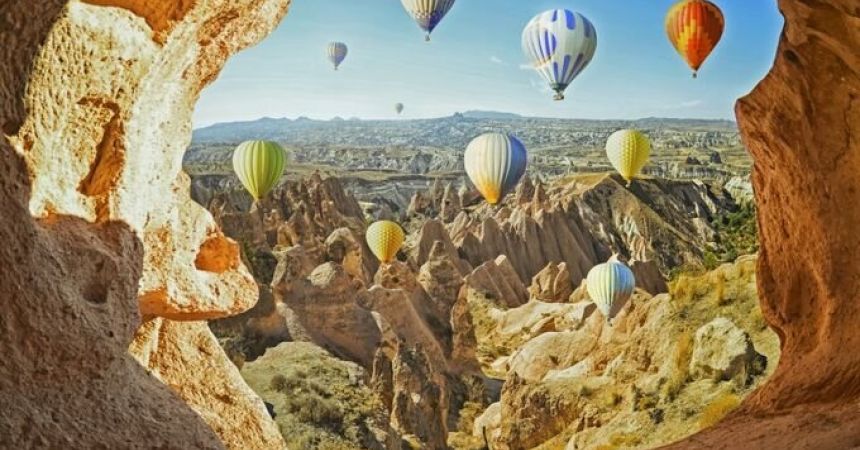
What August Does to Hot Air Balloon Planning
The temperature is not usually the hardest part of an August balloon morning.
The alarm clock is.
Sunrise comes early, which means pickup can occur long before many travelers would normally consider beginning a holiday day. That creates a second August planning problem: fatigue.
A balloon flight followed immediately by an overloaded full-day itinerary and sunset excursion can produce an exceptionally long day.
If you are booking a Cappadocia balloon experience, consider what comes afterward. A relaxed breakfast or less demanding first sightseeing block can be smarter than launching straight into the most strenuous activity on the itinerary.
Flights themselves remain dependent on appropriate aviation conditions, including wind and visibility. Summer sunshine is not a guarantee of operation.
Your Hotel Matters More Than You Think
In cooler months, accommodation decisions may revolve around atmosphere, location and view.
August adds another question: Where will you actually want to be at 3 p.m.?
If your plan includes a midday break, a comfortable hotel becomes part of the itinerary rather than merely somewhere you sleep.
Check cooling arrangements carefully. Cave rooms can have naturally moderated temperatures, but individual properties and rooms vary considerably. Some travelers are perfectly comfortable without conventional air-conditioning; others are not.
Location also matters.
A hotel within easy reach of restaurants and the center of Göreme makes a short break simpler than accommodation requiring additional transport every time you want to leave or return.
This is one of those practical details that seems minor during booking and becomes obvious once you arrive.
Don't Sacrifice the Evening
August evenings are one of the reasons the month still works so well.
After the stronger afternoon heat, the landscape gradually becomes inviting again. Shadows lengthen, the rock formations regain depth, and being outdoors stops feeling like something that needs to be carefully managed.
This is when slowing down pays off.
Rather than arriving at sunset exhausted from an uninterrupted tour, you can approach the evening as a separate part of the trip.
A short walk, dinner on a terrace or a Cappadocia evening journey can take advantage of the more comfortable conditions without needing another major sightseeing program.
The evening does not have to contain an “activity” at all.
Sometimes walking through Göreme after the temperature drops is enough.
Who Struggles Most With August?
Not necessarily people who dislike heat.
Travelers who refuse to adjust their schedule often struggle more.
If your ideal holiday means leaving the hotel at 10 a.m., walking continuously through exposed landscapes until late afternoon and completing every attraction on a predetermined list, August may feel demanding.
If you are comfortable starting some days earlier, slowing down when necessary and returning outdoors later, the month becomes much easier.
That is August's central trade-off.
You get dry summer conditions, long daylight and plenty of opportunities to experience Cappadocia outdoors.
In return, the hottest hours ask for respect.
August Is Not Just a Hotter July
The temperature ranges may look similar enough that these months are frequently treated as one season.
Their travel stories are different.
July reveals Cappadocia through the contrast between exposed summer landscapes and its naturally sheltered rock-cut environments.
August goes one step further.
By the heart of summer, the itinerary itself becomes the tool for dealing with the weather.
Timing matters. Breaks matter. Hotel comfort matters. Choosing one meaningful morning walk instead of three outdoor stops matters.
Once those decisions are made well, the temperature becomes much less intimidating.

A travel professional specializing in tailor-made travel planning, guest experience management, and multi-destination tourism operations.
With over 23 years of experience in the travel industry, he designs and manages private and cultural tours for international travelers across Türkiye, Greece, Egypt, Jordan, Morocco, and other destinations.
He has strong expertise in both online and face-to-face guest communication, sales processes, and end-to-end travel operations.
Working closely with hotels, travel agencies, and local partners, he ensures smooth coordination and high-quality travel experiences at every stage of the journey.
His focus is on delivering personalized, reliable, and seamless travel experiences for international guests worldwide.